Easter is not just another holiday or a tradition we repeat each year. It is the very foundation of the Christian faith. Everything we believe as Christians comes down to one simple, but powerful question: Did Jesus really rise from the dead?
If the answer is no, then Christianity isn’t just slightly wrong, it completely falls apart. The hope of heaven, the forgiveness of sins, the purpose behind everything we believe, all of it depends on whether the resurrection actually happened. Even Paul the Apostle said it plainly: if Jesus did not rise from the dead, then our faith is meaningless. That’s how serious this is. Christianity is not built on feelings or good ideas. It is built on a real event in history.
To understand why the resurrection matters so much, we first have to understand what happened before it, the crucifixion.
Jesus did not die a peaceful or easy death. He was betrayed, arrested, and beaten. He was whipped with a Roman scourge, a tool designed to tear into the skin. He was mocked, spit on, and forced to wear a crown of thorns pressed into His head. He was then made to carry His cross until He no longer had the strength. Finally, He was nailed to that cross, hands and feet, and left to die.
Crucifixion was not just about death. It was about causing great suffering. It was slow and painful, often taking hours. The person on the cross would have to push up on the nails through their feet just to take a breath, over and over again, until their body could no longer do it. This is how Jesus died.
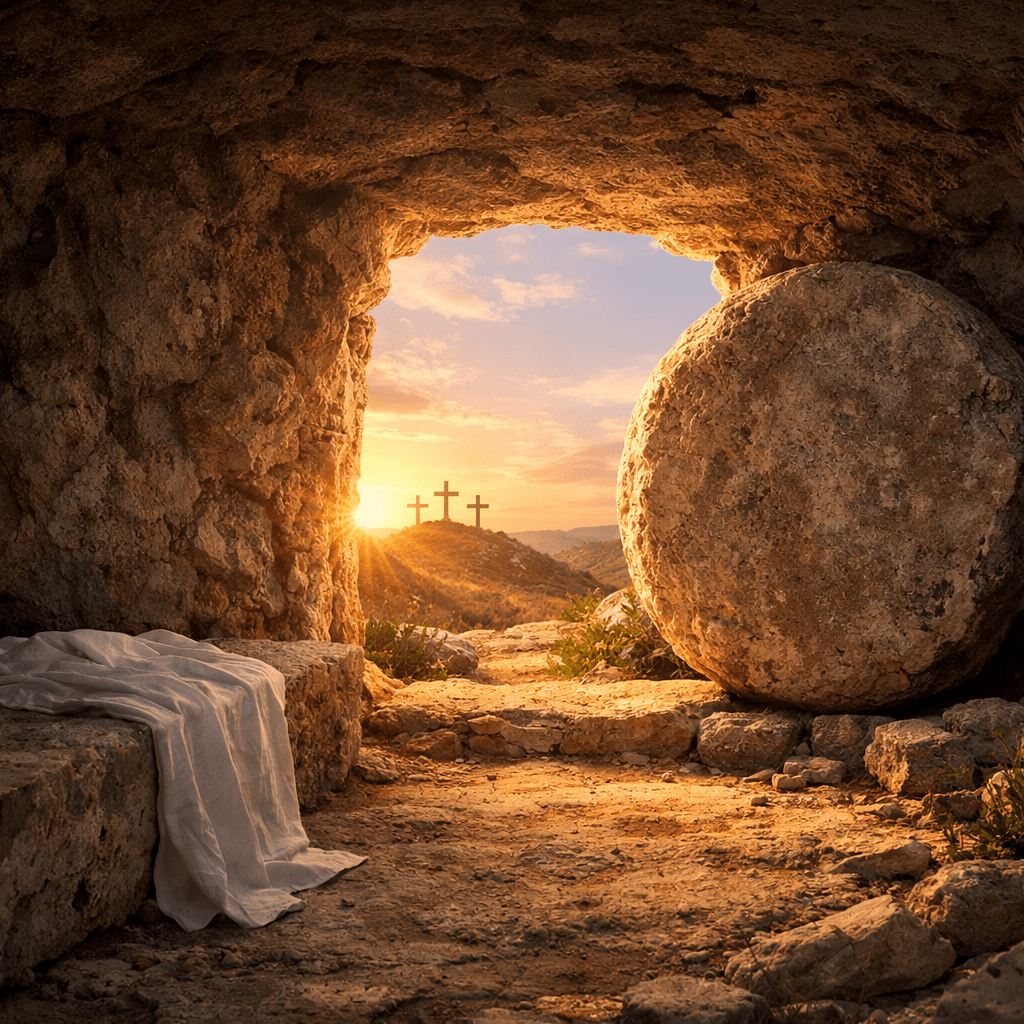
And there was no doubt about it. The Romans were experts at execution. They knew when someone was dead. They would lunge a spear through Jesus side to confirm He was gone. The people who followed Jesus saw it. His enemies saw it. His body was taken down and placed in a tomb, and a large stone was rolled in front of it. Guards were even posted to make sure no one could tamper with it.
Everyone believed the story was over.
But then came the third day.
When the tomb was found, it was empty. And one of the most important details in that moment is something that might seem small at first. The first people to discover the empty tomb were women. In that time, women were not considered reliable witnesses. Their testimony didn’t carry weight in society. If someone were trying to make up a story to convince people, they would never choose women to be the first witnesses.
But that’s exactly what the Bible tells us. The women came to the tomb, found it empty, and were the first to share the news. This detail actually strengthens the truth of the story. It shows that the account wasn’t created to sound convincing, it was simply told as it happened.
The story doesn’t stop with an empty tomb.
After His resurrection, Jesus appeared to many people. Not just one or two, but over 500. These were real people, living at the same time, who could have spoken up if it wasn’t true. When this was first written and shared, many of those witnesses were still alive. If the resurrection were false, it could have and would have been shut down quickly.
But it wasn’t.
Instead, the message spread.
One of the strongest pieces of evidence is what happened to the disciples. After Jesus was crucified, they were afraid. They believed they might be next. They locked themselves in a room, hiding, unsure of what to do. Everything they had believed in seemed to be gone.
But something changed in them.
After they saw Jesus alive, everything about them was different. These same men who were once hiding became bold. They began speaking openly, telling others that Jesus had risen from the dead. They stood in front of crowds, leaders, and even the same authorities who had crucified Jesus.
They didn’t just speak—they stood firm, even when it cost them everything.
Many of them were beaten, imprisoned, and even killed for what they believed. But they didn’t back down. And that’s important, because people may suffer for something they believe is true, but they will never suffer and die for something they know is a lie. The disciples didn’t just believe Jesus rose from the dead, they knew it, they saw it and gained courage from it.
That kind of change doesn’t happen without a reason.
And the most reasonable explanation is that they truly saw the risen Jesus.
This is why Easter matters so much. It is not just about remembering an event, it is about what that event means for us today. If Jesus rose from the dead, then death is not the end. It means that sin has been paid for. It means that there is hope in this life and beyond this life. It means that we have a way to be made right with God and spend eternity with Him.
But this truth also calls for a response.
It is not enough to simply know the story or say, “I believe that happened.” Christianity is not about knowing facts. It is not enough to say “I know who Jesus is.” Satin himself knew who Jesus was. It is about having a relationship. It is about seeking God, trusting Him, and following Him in our daily lives. It is about standing before God one day and being able to say “I know everything your Son did, because I loved Him enough to study everything He did for my sake.”
Easter reminds us that the cross was not the end.
What looked like defeat was actually victory. What seemed final was only the beginning. The tomb was empty, and that changes everything.
Because of that empty tomb, we are offered something we could never earn on our own, grace, forgiveness, and eternal life.
Christianity stands on this one moment in history.
And that is why the resurrection is not just important…
It is everything.
 Joy in Truth